Built Through Years Of Recording, Rebuilding, And Starting Again.
The Dub Factory grew out of decades spent exploring music production, recording technology, communication systems, media creation, storytelling, instructional design, and the evolving relationship between creativity and technology.
Four tracks, a drum machine, and the beginning of the obsession.
The story started in the mid-1990s with an mid-80's Kramer guitar, a Kustom practice amp, an Alesis SR16 drum machine, and a Tascam Porta 02 cassette four-track recorder purchased in 1994.
At the time, the goal was simple: figure out how songs were built. Early recordings were mostly hard rock demos layered track-by-track onto cassette tape while experimenting with programmed drum patterns, guitar arrangements, and basic recording techniques.
Playing and writing with friends eventually expanded into learning how chord progressions worked, how solos fit into songs, and how recording itself could become part of the creative process.
It quickly became obvious that the process of creating music was just as exciting as listening to it.
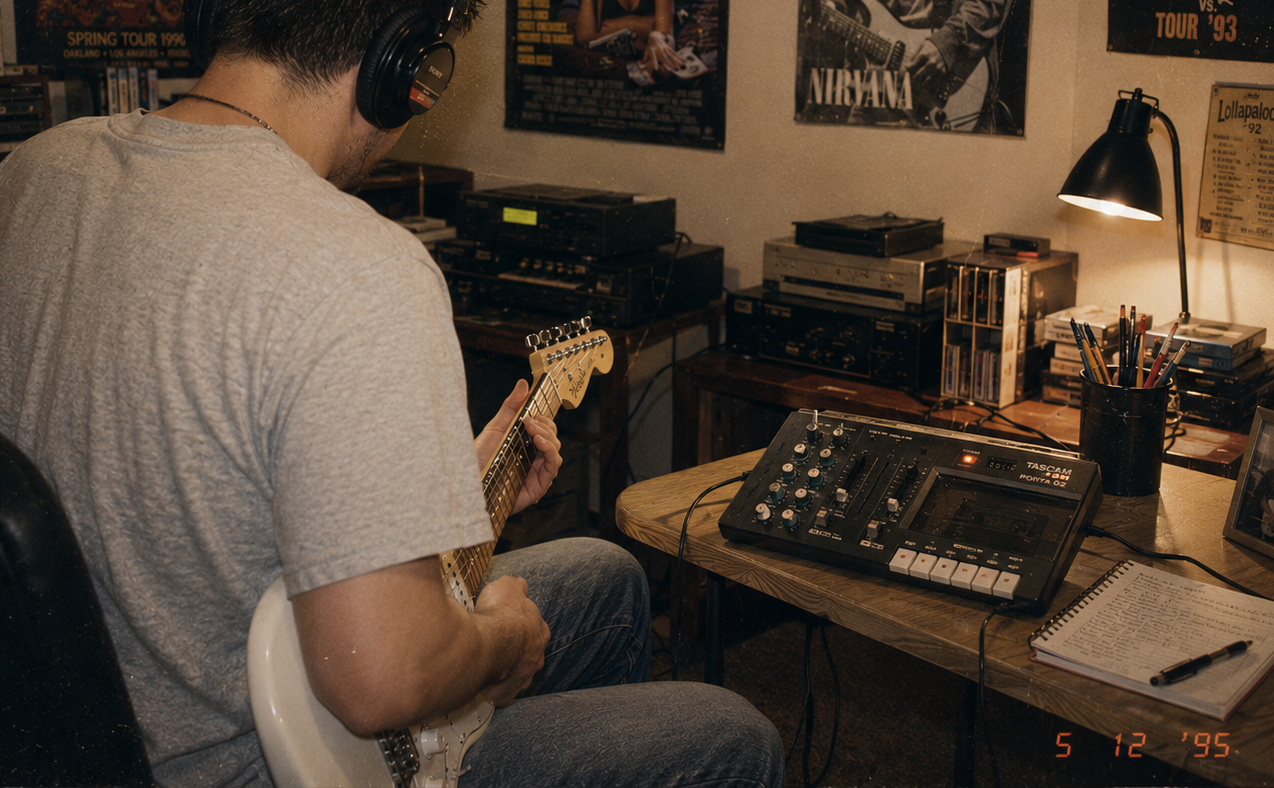
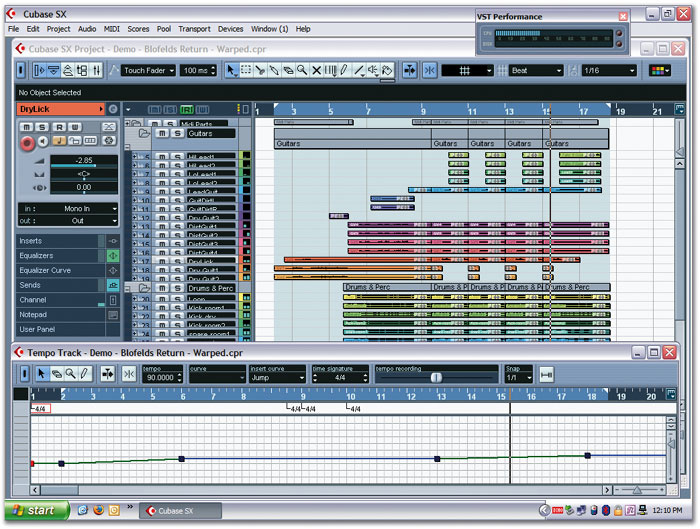
From cassette tape to early DAW production.
As recording technology evolved, the process moved into digital systems using hardware like the Roland EX series digital recorder with Zip Disk storage before eventually transitioning into full DAW production environments.
Early Cubase systems paired with Presonus Firepods and Firewire interfaces opened the door into multi-track editing, software production, automation, virtual instruments, and modern studio workflow.
Every technological jump introduced new possibilities, but the underlying fascination remained the same: understanding how creative ideas move from imagination into finished sound.
The work expanded beyond music.
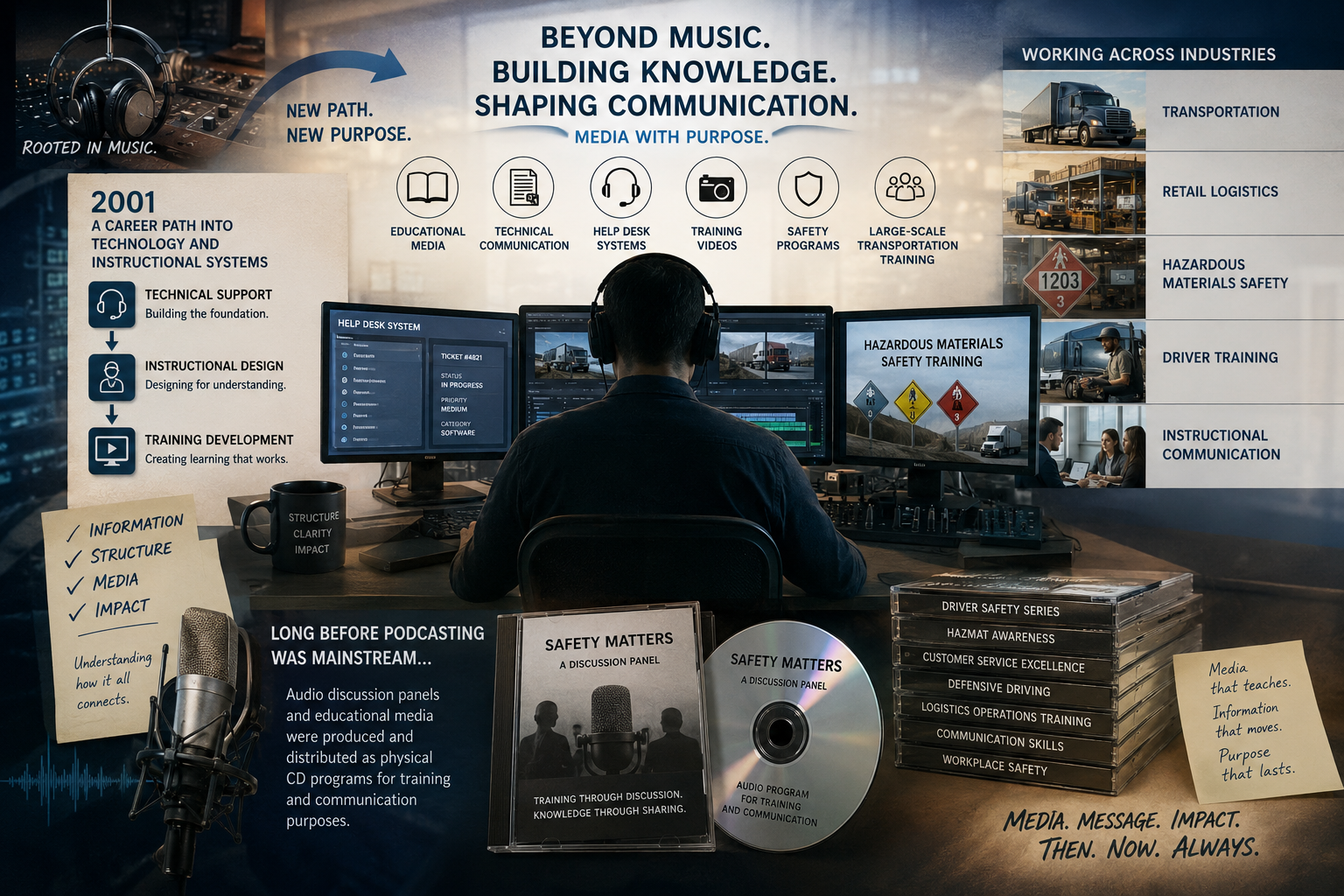
In 2001, a career path into technology and instructional systems introduced a new side of media production.
Starting in technical support before moving into instructional design and training development, the focus expanded into educational media, technical communication, help desk systems, training videos, safety programs, and large-scale transportation training initiatives.
Work connected to organizations and industries involving transportation, retail logistics, hazardous materials safety, driver training, and instructional communication helped shape a broader understanding of how information, structure, and media interact.
Long before podcasting became mainstream, audio discussion panels and educational media were already being produced and distributed as physical CD programs for training and communication purposes.
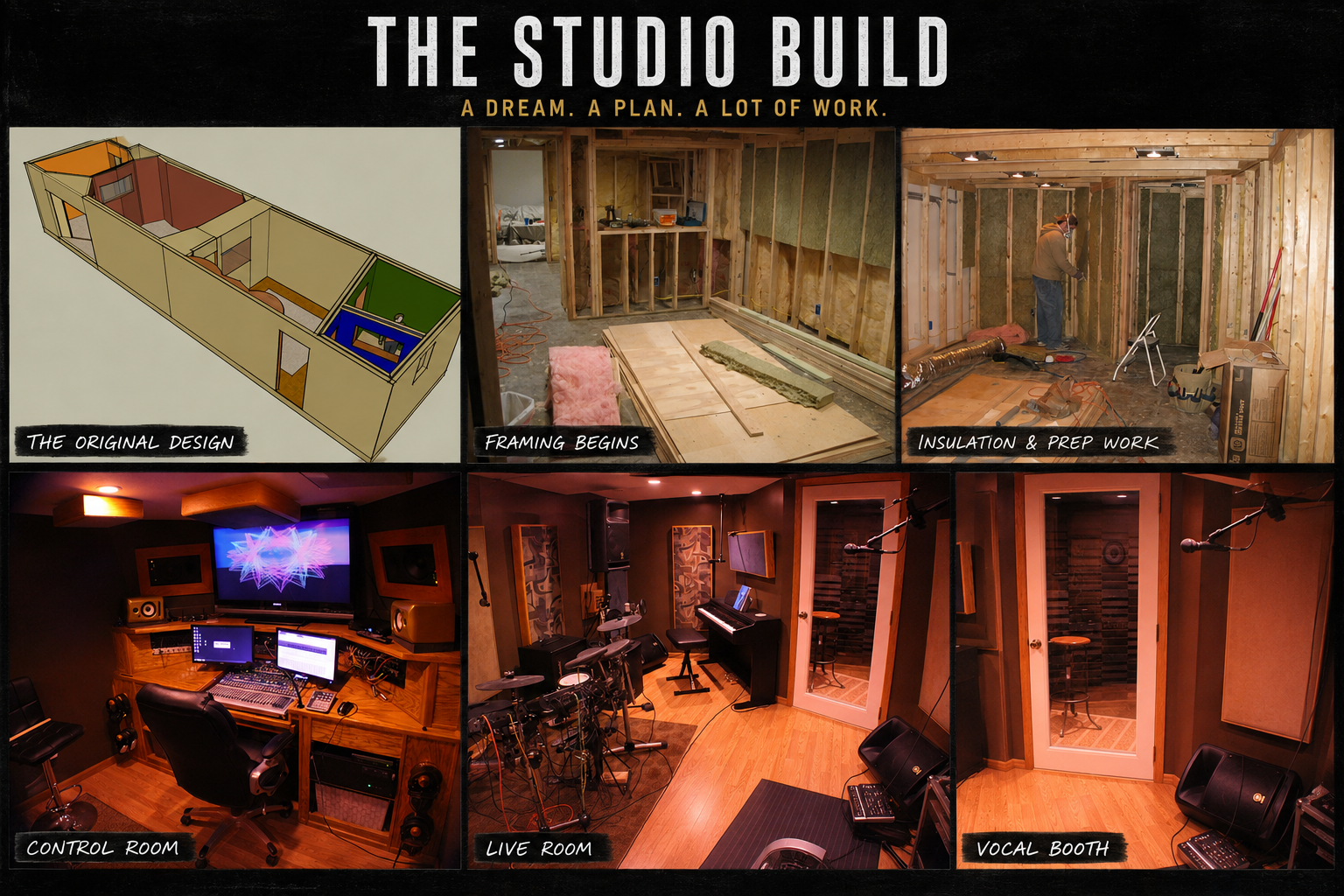
Designing and building a real studio by hand.
As home recording technology became more affordable during the mid-2000s, the idea of building a dedicated studio environment slowly transformed from fantasy into something achievable.
Studio planning began around 2005 and construction officially started in 2007 inside a basement space designed around acoustic treatment, isolation, and professional recording workflow.
The studio was built entirely by hand with dual-wall construction, isolated tracking areas, non-parallel surfaces for improved sound deflection, separated recording rooms, and a dedicated control room designed specifically for mixing and production.
Construction temporarily stalled during the economic collapse of 2008 before finally being completed in 2010 after years of work, setbacks, redesigns, and persistence.
The studio found new voices.
By 2012, the recording environment had expanded beyond music into sports commentary, podcast production, online media, and discussion-based programming.
Weekly college football audio programs, radio-style podcasts, interviews, commentary projects, and online media production became another extension of the studio itself.
What initially started as a way to use the recording setup for something tangible eventually became another layer in the growing relationship between production, communication, storytelling, and audience connection.

The studio changed. The passion never disappeared.
Life eventually changed direction. Marriage, family, career changes, relocation, economic uncertainty, and the realities of adulthood pushed the original studio deeper into the background for several years.
The original studio was eventually dismantled during a major home renovation before years later moving into a new house with a completely unfinished basement and the opportunity to begin again from scratch.
This time, the approach became smarter, leaner, and more intentional. Lessons from the first build shaped the second. Technology evolved. Creative tools evolved. AI-assisted workflows introduced entirely new possibilities for songwriting, production, media creation, and experimentation.
What emerged was not simply another studio room, but the foundation for a broader connected ecosystem built around music, media, technology, communication, storytelling, and creative development.
The tools continue to evolve. The systems continue to evolve. But the excitement of building something meaningful through sound and media remains exactly the same.
The Dub Factory was never created from a formal business blueprint or a perfectly planned roadmap. It grew organically through years of recording, learning, rebuilding, experimenting, adapting, and continuing to chase the excitement of creating something meaningful.
Every stage of the journey, from cassette four-tracks and basement studio construction to instructional media, podcasting, commentary, digital production, and modern AI-assisted workflows, became another layer in the system that exists today.
And now, after all of it, this feels like the right time to build it forward in a new way.